Delete Negative Reviews: What Really Works and What Doesn’t?
If you’re wondering whether you can delete negative reviews, the short answer is sometimes, but not always. It depends on where the review is posted, whether it violates platform policies, and how you respond. While you cannot simply erase every bad comment, there are proven ways to manage, report, and even remove harmful or fake feedback. More importantly, there are smarter strategies to reduce their impact and protect your reputation.
Understanding this distinction is key. Many businesses waste time trying to force removal when they should be focusing on control, response, and credibility. A smart Delete Negative Reviews approach isn’t about chasing perfection it’s about identifying violations, addressing genuine concerns professionally, and building a trustworthy online presence that outweighs occasional criticism.
What does it actually mean to remove a bad review?
Not all reviews are created equal. Some are genuine customer feedback, while others may be misleading, abusive, or fake. Platforms like Google, Yelp, and Trustpilot have strict policies about what can and cannot be taken down.
Reviews can typically be removed if they include:
- Spam or fake content
- Hate speech or offensive language
- Conflicts of interest (like competitor attacks)
- Personal or confidential information
However, honest negative opinions, even harsh ones, usually stay.This is where many misunderstand. The goal isn’t always to delete bad reviews but to identify which ones are eligible for removal and which ones require a strategic response.
How to request removal the right way?
If you believe a review violates guidelines, you can take direct action. Each platform has a reporting system, but success depends on how clearly you justify your claim.
Start by documenting the issue. Take screenshots, note the policy violation, and avoid emotional language. When submitting a report, be precise and factual.
In some cases, reaching out to the reviewer works surprisingly well. A polite message acknowledging their concern and offering a solution can lead them to edit or remove the review themselves. People often just want to feel heard.
Legal action is another route, but it should be used carefully. It’s only appropriate in cases of defamation or serious false claims, and it can sometimes attract unwanted attention.
Why is responding more powerful than removing?
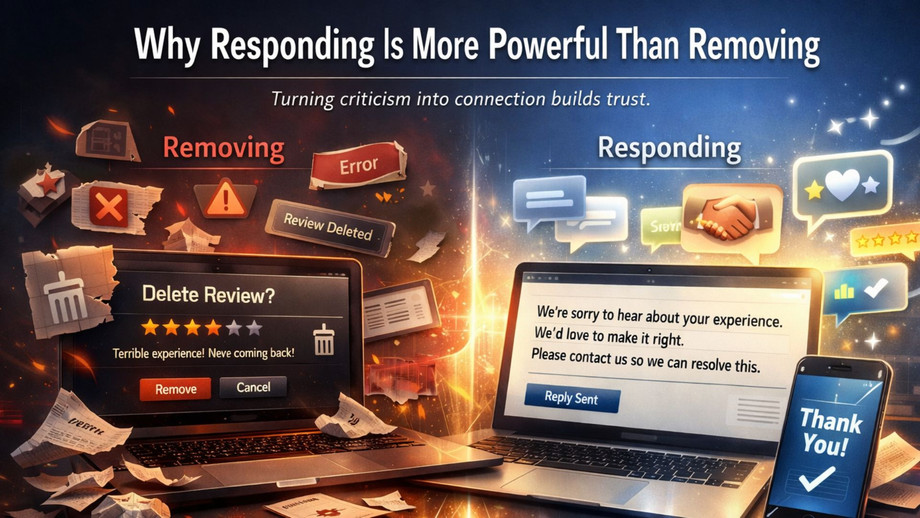
Here’s something many businesses overlook: a well-written response to a bad review can actually improve your reputation, especially when it comes to Google reviews, where customer decisions are often made in seconds.
When potential customers browse your reviews, they’re not just reading complaints; they’re evaluating how you handle them. A thoughtful, professional reply signals accountability, transparency, and genuine care for your customers.
Instead of ignoring negative feedback or reacting defensively, follow a smarter approach:
- Acknowledge the issue to show you’re listening
- Apologize when appropriate to demonstrate empathy
- Offer a clear solution or next step to resolve the concern
- Maintain a calm, respectful tone to reflect professionalism
This strategy doesn’t just control damage; it actively builds trust.
In fact, businesses that consistently respond to Google reviews often outperform competitors with perfect ratings but no engagement. Why? Because responsiveness shows authenticity. Customers trust businesses that are present, proactive, and willing to improve.
A negative review handled well can become a powerful trust signal and sometimes even win back not just one customer, but many more who are watching.
Preventing negative reviews before they happen
The best strategy is always proactive. Most negative reviews come from unmet expectations, poor communication, or delayed responses.
To reduce them, focus on the customer experience at every stage. Make sure your service is clear, consistent, and responsive. Small improvements can make a big difference.
Encouraging satisfied customers to leave reviews also helps balance your profile. A strong base of positive feedback naturally pushes occasional negatives lower in visibility.
This is where reputation management becomes a long-term effort rather than a quick fix. You’re not just trying to delete negative reviews; you’re building a system where they have less impact.
When should you not try to remove a review?
Trying to remove every negative comment can actually backfire. It may look suspicious or even damage credibility if customers notice only perfect ratings or only the best review highlighted.
Authenticity matters. A mix of reviews, both positive and negative, makes your business appear more real and trustworthy.
Instead of chasing perfection, aim for transparency:
- Address concerns openly rather than hiding them
- Respond thoughtfully to show accountability
- Use feedback as an opportunity to improve
Ironically, a few negative reviews handled well can strengthen your brand more than a flawless profile. They show potential customers that you’re honest, responsive, and committed to delivering a better experience.
Long-term reputation strategy that actually works

Managing online reviews isn’t about control; it’s about influence. The businesses that succeed are the ones that treat feedback as an opportunity rather than a threat.
Consistency is key. Regularly monitor your reviews, respond promptly, and learn from recurring issues. Over time, this builds a strong and resilient reputation.
Technology can help, but the human touch matters more. People remember how you made them feel, not just what went wrong.
Quick Summary
You can remove certain reviews if they break platform rules, but not all negative feedback is removable. The smartest approach is a mix of reporting violations, responding professionally, and improving customer experience. Delete Negative Reviews strategies should be applied carefully, focusing only on policy violations rather than genuine feedback. A balanced review profile, handled well, builds more trust than a perfect one.
FAQs
Can I legally force a review to be removed?
Only in cases where the review is defamatory, false, or violates laws. Otherwise, platforms prioritize user opinions.
How long does it take to remove a review?
It varies. Some platforms review reports within a few days, while others may take weeks.
Should I respond to every negative review?
Yes, whenever possible. It shows professionalism and helps future customers see your commitment.
Do negative reviews hurt business?
They can, but only if ignored. When handled properly, they can actually improve credibility.
What is the best alternative to removing bad reviews?
Focus on customer satisfaction, encourage positive feedback, and respond thoughtfully to criticism.
Comments
Post a Comment